
The doctrine of frustration discharges contracting parties when an unforeseen event renders performance physically or legally impossible, or transforms the obligation into something radically different from what was undertaken. When the Suez Canal closed in 1956 and 1967, maritime carriers and cargo interests faced significantly longer voyages around the Cape of Good Hope. This article examines why increased expense and extended transit times failed to discharge these shipping contracts.
The Doctrine of Frustration
Frustration occurs when a supervening event, occurring after contract formation and without fault of either party, makes the performance of the contract impossible, or transforms the obligation into something radically different from that which was undertaken. The doctrine is narrow in scope, serving to prevent injustice where the foundation of the contract has collapsed.
Crucially, the English courts do not permit frustration to function as an escape valve for bad bargains. If a contract remains capable of performance, albeit at a higher cost or with greater difficulty, the doctrine does not apply. This distinction is vital for long-term commercial agreements where market volatility is a foreseeable risk.
Historical Context of Suez Closures
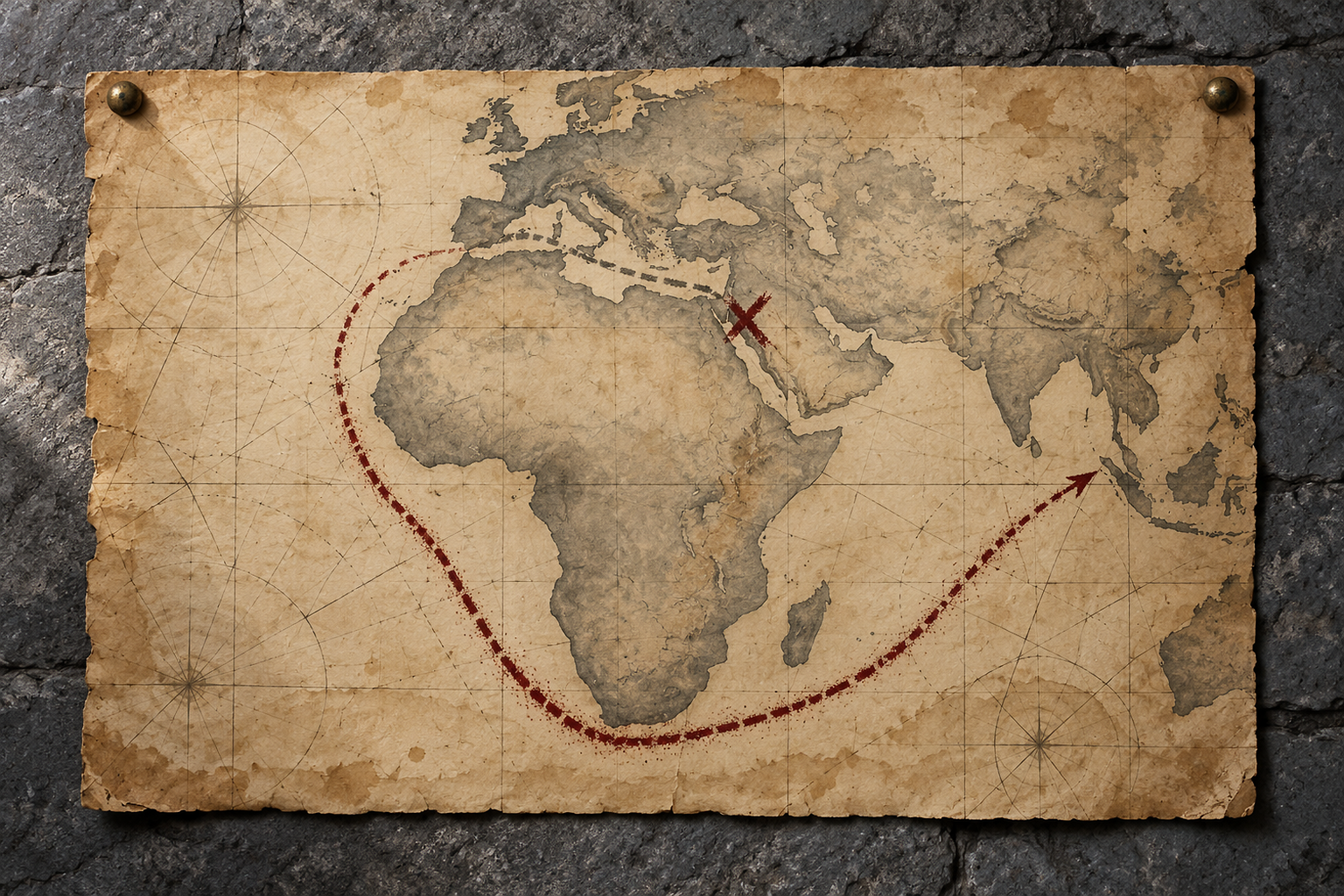
The closure of the Suez Canal in 1956, following the nationalization of the Canal Company, disrupted global shipping routes. Vessels bound for Europe from East Africa or Asia were forced to sail around the Cape of Good Hope. This added thousands of miles to voyages, drastically increasing fuel consumption, personnel time, and general operating expenses.
At the time, many traders argued that the closure destroyed the underlying premise of their shipping contracts. They contended that because the route via Suez was standard and expected, its unavailability essentially terminated the ability to fulfill the contract according to the original contemplation of the parties.
The Tsakiroglou Decision

The leading case of Tsakiroglou & Co Ltd v Noblee Thorl GmbH [1962] AC 93 involved a CIF contract for the sale of groundnuts to be shipped from Port Sudan to Hamburg. The contract did not explicitly specify the route, but the Suez Canal was the customary passage. Following the closure, the sellers refused to ship the goods via the Cape, claiming the contract was frustrated.
The House of Lords held that the contract was not frustrated. While the voyage via the Cape was twice as long and substantially more expensive, the court concluded that the cargo was still capable of being delivered. The essential nature of the obligation remained the delivery of goods, and the route change did not alter the fundamental subject matter of the contract.
Distinguishing Hardship from Frustration

A central tension in the Suez cases was the difference between 'commercial impossibility' and 'impossibility of performance.' Under English law, these concepts are distinct. Impossibility of performance exists when the subject matter is destroyed or the means of performance are legally prohibited.
Hardship, however, is a matter of degree. The law assumes that parties allocate the risk of fluctuating costs through pricing and insurance. Unless the contract contains a specific 'force majeure' clause detailing the effect of canal closures, the party bearing the performance risk must fulfill its duty despite the increased economic burden.
The Importance of Customary Routes
A relevant issue is whether a contract can be frustrated if it requires a specific route that becomes unavailable. If a charterparty explicitly mandates the Suez Canal as the sole passage, its closure might arguably prevent performance.
However, in the absence of such specific terms, the court looks to industry practice. Even if a specific route is customary, the contract is only frustrated if the change of route fundamentally changes the nature of the delivery. The courts have consistently held that a mere change in the maritime path does not suffice if the commercial object remains achievable.
The Role of Force Majeure Clauses

Commercial parties often mitigate the risk of frustration by drafting detailed force majeure clauses. These provisions allow parties to suspend or terminate performance if specific events, such as war or canal closures, occur.
When a contract includes an express provision for such disruptions, the court defers to the agreed-upon terms rather than relying on the common law doctrine of frustration. The existence of these clauses highlights that parties can anticipate and manage these risks through drafting rather than litigation.
Comparison with Other Jurisdictions

While English law emphasizes strict adherence to contractual obligations, some civil law systems allow for 'hardship' or 'impracticability' doctrines (such as rebus sic stantibus) to adjust or terminate contracts when the economic equilibrium is severely upset.
This contrast underscores that the English approach is rooted in the sanctity of contract. English courts prefer to hold parties to their bargains to ensure stability and predictability in international maritime commerce, leaving the mitigation of external risks to the parties themselves.
Impact on Subsequent Shipping Disputes

The Suez decisions settled that extended transit times are generally not a basis for frustration. This precedent provides a degree of certainty for shipowners and charterers, ensuring they know that geopolitical events resulting in longer voyages will not automatically invalidate existing charters.
Subsequent decisions arising from the 1967 closure and other regional disruptions followed the precedent set by the 1956 litigation. The legal landscape remains settled, reinforcing the view that the Suez Canal, while vital for efficiency, is not the sole foundation of maritime trade contracts.
Limitations of the Doctrine

Frustration remains a rare remedy. It is not an invitation to re-evaluate the fairness of a contract once market conditions shift. The legal inquiry is strictly limited to whether the performance is truly 'radically different' from the initial promise.
For practitioners, the lesson remains that if a party wishes to be excused due to regional instability or infrastructure failures, it must build those protections into the contract itself. Reliance on the common law doctrine of frustration is unlikely to yield success in the face of foreseeable maritime risks.
Conclusion

The Suez Canal closures serve as a definitive lesson in English contract law. They demonstrate that the law prioritizes certainty and the allocation of risk over the mitigation of commercial loss.
Because performance remains physically possible, the forced rerouting of ships does not meet the high threshold for frustration. Charterers and shipowners operate within a framework where the burden of unforeseen geographical delays falls on the party responsible for performance.
Key takeaways from the Suez frustration precedents include:
- Frustration requires performance to become impossible or radically different, not merely more expensive.
- Customary routes are not necessarily implicit conditions of the contract.
- Parties are encouraged to manage risk through explicit contractual clauses.
- Commercial hardship is an insufficient basis for the discharge of duty.

Further reading
Read the primary authority alongside this analysis. Check its jurisdiction, date and subsequent treatment.
Tsakiroglou & Co Ltd v Noblee Thorl GmbH [1962] AC 93External reference · Opens in a new tab