
The principle of freedom of the high seas mandates that, save for exceptional cases provided for by international treaties, ships are subject to the exclusive jurisdiction of their flag state. This article explores the tension between this foundational rule and the enforcement mechanisms designed to combat piracy and illegal, unreported, and unregulated (IUU) fishing, identifying the threshold at which flag state exclusivity yields to collective international enforcement.
The Principle of Flag State Jurisdiction
The high seas are defined under Article 86 of UNCLOS as all parts of the sea not included in the exclusive economic zone, the territorial sea, or the internal waters of a state. Under Article 92, ships sail under the flag of one state only and are subject to its exclusive jurisdiction on the high seas.
This exclusive jurisdiction is the bedrock of maritime stability, preventing competing assertions of authority that could lead to conflict. Any exception to this rule must be expressly provided for in the Convention or by other international law, such as the right of hot pursuit or specific boarding agreements.
Defining Piracy under International Law

Piracy is defined in Article 101 of UNCLOS as any illegal act of violence, detention, or depredation committed for private ends by the crew or passengers of a private ship. Critically, these acts must occur on the high seas against another ship or persons therein.
The 'private ends' requirement is a key limitation; it distinguishes piracy from politically motivated violence or terrorism, which may not trigger the same universal jurisdiction under the law of the sea. Only private vessels can be pirates; a warship or government vessel whose crew mutinies and engages in such acts is considered to have the same status as a private ship.
The Scope of Universal Jurisdiction

Article 105 of UNCLOS grants every state the right to seize a pirate ship or aircraft on the high seas. This is one of the few instances where universal jurisdiction applies, allowing for the arrest of the perpetrators and the seizure of property.
Under Article 105, the courts of the state that carried out the seizure may decide the penalties to be imposed and determine the disposal of the vessels and property. Grounded in the legal classification of pirates as hostis humani generis—enemies of all mankind—universal jurisdiction ensures that offenders cannot find safe haven in international waters.
Limitations on IUU Fishing Enforcement

Unlike piracy, IUU fishing does not grant a state universal jurisdiction to board or seize foreign-flagged vessels on the high seas. Enforcement is generally limited to the flag state or via Regional Fisheries Management Organizations (RFMOs).
Coastal states have enforcement powers within their Exclusive Economic Zone (EEZ), but on the high seas, the flag state retains primary authority. This often creates an 'enforcement gap' where vessels re-flag to states that provide little regulatory oversight, a practice known as 'flags of convenience'.
Boarding and Inspection Rights

Under Article 110 of UNCLOS, the right of visit on the high seas is strictly limited. A warship may only board a foreign merchant vessel if there are reasonable grounds to suspect piracy, the slave trade, unauthorized broadcasting, that the ship is without nationality, or that it is in reality of the same nationality as the warship.
Because Article 110 does not include resource conservation or fisheries violations among its enumerated grounds, warships have no general right of visit to inspect suspected fishing vessels. Outside these explicit treaty exceptions or flag state consent, boarding a foreign vessel on the high seas breaches international law.
The Role of RFMOs and Treaties

To bridge the enforcement gap, states have formed Regional Fisheries Management Organizations. These entities establish conservation measures that member states agree to enforce against their own flagged vessels.
These agreements often include 'board and inspect' protocols that allow member states to board one another’s vessels to verify compliance with conservation rules. However, these powers are contractual, not inherent to international law, and do not bind non-member states.
Right of Hot Pursuit
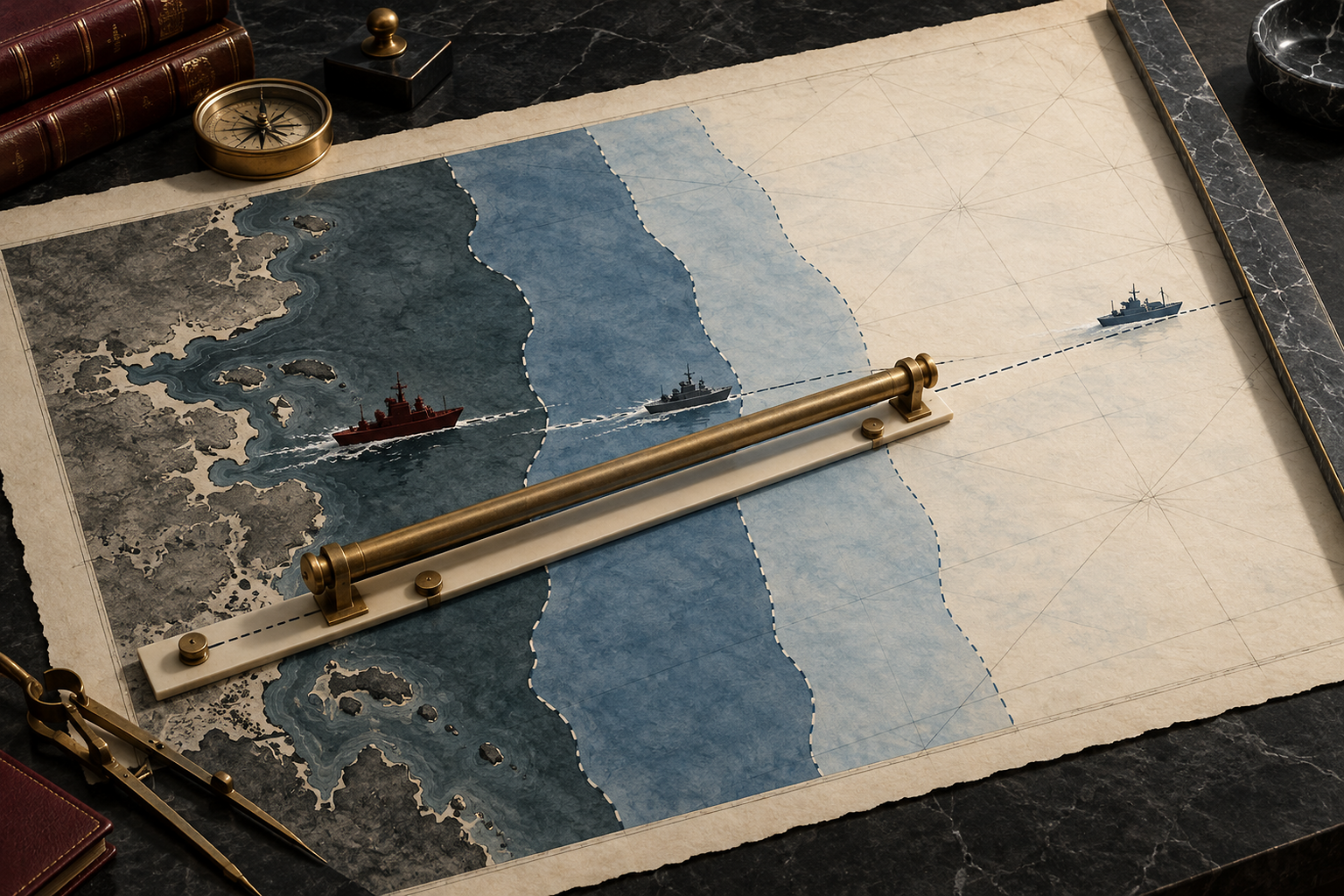
The right of hot pursuit, established in Article 111, allows a coastal state to continue the pursuit of a foreign ship into the high seas if there is good reason to believe the ship violated laws within the coastal state's jurisdiction.
The pursuit must be continuous and must begin within the territorial sea or EEZ. Once the pursued vessel enters its own territorial sea or that of a third state, the pursuit must cease, preventing the escalation of jurisdictional conflict in foreign sovereign waters.
Jurisdictional Challenges in the EEZ

The transition from the EEZ to the high seas creates practical enforcement hurdles. While a coastal state has sovereign rights over resources in the EEZ, it does not possess full sovereign jurisdiction over all foreign ships.
Illegal fishing in the EEZ may be penalized under the coastal state's laws, but the degree of physical force permitted against a vessel—such as the use of weapons—is subject to the requirement of reasonableness and the avoidance of excessive force under international custom.
The Burden of Proof and Evidence

When a state seizes a vessel on suspicion of piracy, the burden rests on the arresting state to prove the 'private ends' and the criminal nature of the act. Hasty seizure without robust evidence can expose the arresting state to claims for damages by the flag state.
The difficulty of maintaining a chain of custody and preserving evidence at sea often complicates subsequent domestic criminal proceedings, highlighting the distance between maritime enforcement and land-based legal processes.
Sovereign Immunity of State Vessels

Warships and other government ships operated for non-commercial purposes enjoy complete immunity from the jurisdiction of any state other than the flag state on the high seas.
Even if a government vessel is suspected of illegal activity, its sovereign immunity bars non-consensual boarding, search, or seizure. This immunity remains complete unless the flag state waives it, restricting high-seas enforcement against state-operated vessels.
Evolution of Enforcement Norms

The international community increasingly relies on port state measures to combat IUU fishing. By restricting port access to vessels that cannot prove a legal catch, states leverage their sovereignty over their own ports to effect indirect control over high seas activities.
This shift reflects the limitations of the traditional high-seas flag state model and acknowledges the reality that regulating access to markets is often more effective than traditional maritime interdiction.
Conclusion: The Balancing Act

The legal framework governing the high seas remains a compromise between the freedom of navigation and the necessity of preventing criminal abuse. Piracy is treated as a unique, existential threat to maritime order, justifying a deviation from flag state exclusivity.
Conversely, unregulated fishing is treated primarily as a regulatory concern, requiring institutional cooperation rather than unilateral force. The stability of the Law of the Sea depends on maintaining these boundaries to prevent enforcement creep while addressing modern maritime threats.
Key distinctions for legal application include:
- Piracy requires 'private ends' whereas IUU fishing is a matter of resource management.
- Universal jurisdiction applies to piracy under Article 105; it does not apply to fishing.
- Flag state consent is required for the inspection of fishing vessels, unless specific RFMO treaty provisions exist.
- Immunity of state vessels remains a significant barrier to enforcement even when illegal conduct is suspected.

Further reading
Read the primary authority alongside this analysis. Check its jurisdiction, date and subsequent treatment.
UN Convention on the Law of the Sea (1982)External reference · Opens in a new tab